Most people walk through life like a tree that cannot bend in the storm. In ideal conditions, they look stable and strong — until the storm hits, and they snap under pressure.
Human beings are much the same, stuck inside a rigid identity that puts them in a box with four walls around them.
When I first started my business, I struggled to shackle the weight of the impostor, that inner voice telling me:
“I am not an entrepreneur.”
Some of these might ring a bell for you:
- “I’m not a leader.”
- “I’m not good at sales.”
- “I’m not a public speaker.”
- “I’m not a business person.”
This is why identity is the highest level of change — because the narratives and concepts you cling to limit your thinking, actions, and ultimately, your potential.
And for most people, this process is unconscious. They don’t even realize they are moonwalking back into their old selves, over and over again.
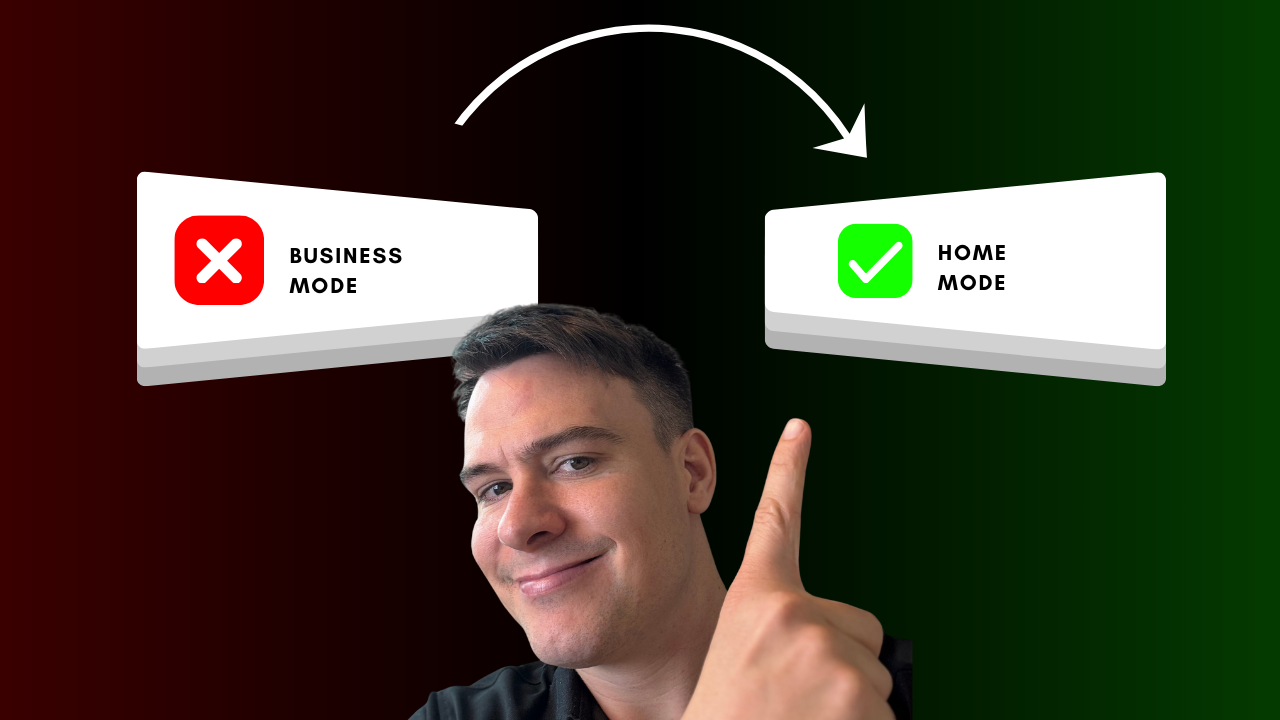
If you want to succeed in life, you must build an adaptive identity — one that evolves as you ascend.
Because at every new level, there is another dragon to slay, and it will require a stronger, wiser version of you.
In this blog — and the training that follows — I’ll teach you how to build an adaptive identity, and how you can use it as a springboard for your future success.
An adaptive identity is your ability to reframe, evolve, and recreate yourself over and over, based on the new demands life or business throws at you.
You move away from fixed beliefs and adopt the mindset:
“I can become anything I choose to be.”
Those who have a rigid identity think:
- “This is just who I am.”
- “I’ve always struggled with this.”
The problem with this thinking is that it gives all your power away to external circumstances — because deep down, you don’t believe you are capable of becoming more.
And when challenges come, you’ll always take the back door.
Meanwhile, a person with an adaptive identity says:
- “I become who I need to be.”
- “I recreate myself every day.”
- “I can change my life at any moment, if I choose to.”
One of my favorite quotes from Alan Watts is:
“You are under no obligation to be the same person you were five minutes ago.”
We are not trees.
We can move if we are not happy with our lives.
It would have been easy for me to stay in Ireland, to walk the same old path.
But I refused to let my old identities hold me back from the part of me that believed I was made for more.
You might be asking,
“But John, how do I change my identity?”
Start by going inward.
Notice your language patterns, especially the words you speak daily.
Pay close attention to what follows “I am” — because wherever you apply a label, you’re building the walls of your identity.
Challenge yourself to rewrite your narrative into something that empowers you.
For example:
- Instead of “I can’t,” say “I haven’t yet.”
- Instead of “I’m not good enough,” say “I am getting better with every repetition.”
The words you use to describe yourself impact how you think, feel, and perform.
This is why real, transformational change must start at the identity level.
To anchor it in, celebrate moments of transformation — those times when you catch yourself falling into an old pattern, but you choose a new path instead.
These moments matter. They are the seeds of the new you.
It takes practice, time, and energy to shift how you see yourself.
But it all starts with those first few steps.
So let me ask you:
What if you built an identity that could adapt to any challenge?
What if you stopped clinging to the old version of you?
True mastery isn’t about who you are right now.
It’s about who you can become — and the choices you make today to walk that ascension path.
If you’re ready to change your identity, watch the training below to deepen your understanding and integrate this into your daily life.
John — Your Identity Architect